Can You Mix Different Brands of Motor Oil? What to Know
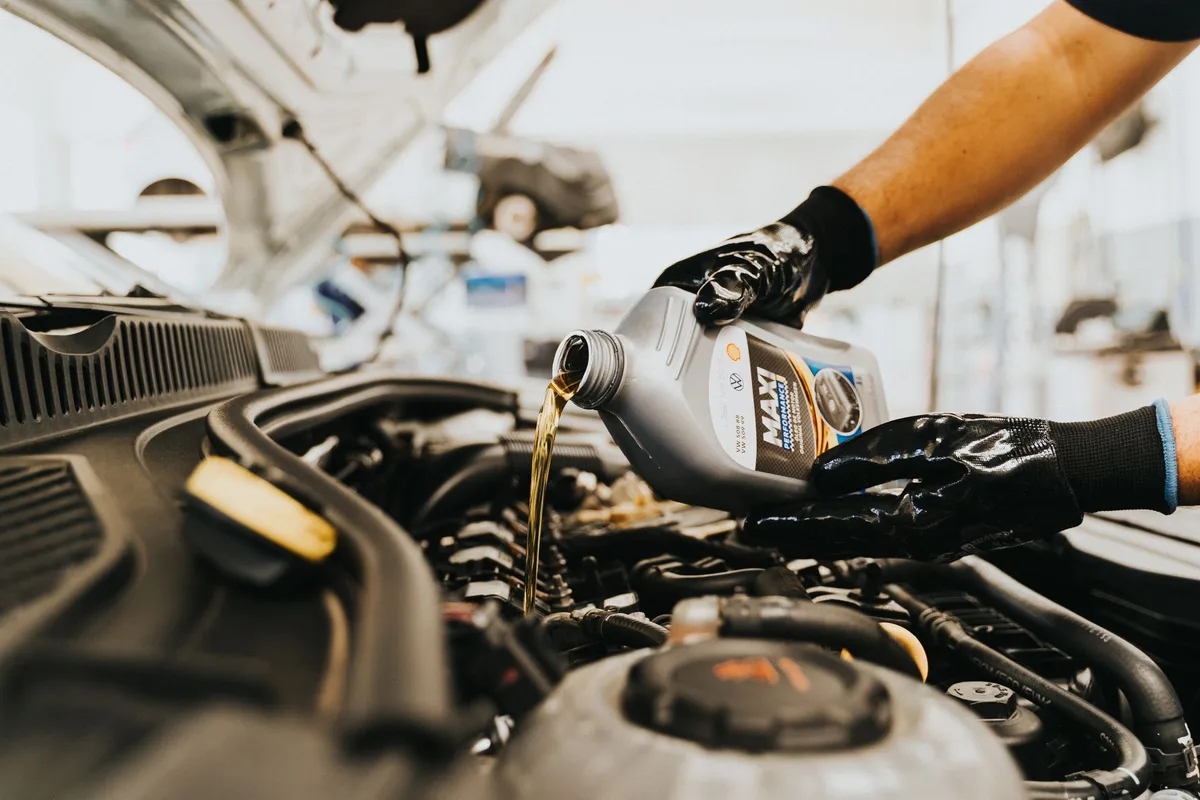
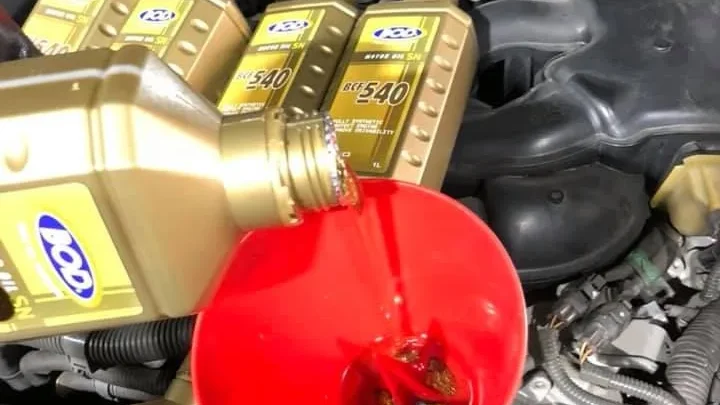
Can you mix different brands of motor oil? Yes, in most cases. The bottle brand matters less than the specs printed on the back.
If two oils meet the same viscosity grade and API service category, mixing them won't hurt your engine.
That's the short version. Manufacturer specs from API and SAE confirm it. Modern oils sold as of 2026 must meet strict compatibility standards like API SP and ILSAC GF-6A.
The real risk isn't the logo on the jug, but mixing oils that don't share the same specs.
Quick Answer
Yes, you can mix different brands of motor oil in most modern engines. Both oils must share the same SAE viscosity grade like 5W-30. Both must meet or exceed your vehicle's required API service category.
European and turbocharged cars may need a specific OEM approval too. Never mix diesel oil with gas oil or motorcycle oil with passenger car oil.
Can You Mix Different Brands of Motor Oil? The Short Answer
Yes, mixing different brands of motor oil is safe as long as you match viscosity and specs. That's the rule that matters. Every API-licensed oil sold in North America has to be compatible with every other API-licensed oil at the same service level.
That's a testing requirement, not a marketing claim.
Where things go wrong is when people mix by brand instead of by spec. A 5W-30 API SP from one brand mixed with a 5W-30 API SP from another brand? Completely fine for a top-off.
A 5W-30 mixed with a 10W-40, or a modern gas-engine oil mixed with an old diesel-rated CI-4? Different story.
What Actually Matters When You Mix Oils (Hint: It's Not the Brand)
The brand on the bottle is mostly marketing. What matters is the fluid inside, and modern motor oils are formulated to meet standardized chemistry.
Every quart of API-licensed oil contains a base stock (Group I through V) and an additive package. The base stock and additives from one brand won't fight the additives from another. Both just need to meet the same performance category.
That's what API testing is built to guarantee.
Here's what actually matters when you're deciding whether to mix:
- Viscosity grade (matching 5W-30 with 5W-30, not 5W-30 with 10W-40)
- API service category (SP with SP, or newer with older where backwards compatible)
- ILSAC or ACEA spec if your car requires it
- OEM approval codes for European vehicles (dexos, MB, BMW, VW, Porsche)
- Base stock type when it matters (mostly for track-driven or racing use)
Brand loyalty won't hurt you. But if you assume "same brand equals same oil," you'll trip up. Mobil 1 alone sells more than a dozen distinct formulations.
The Three Things That Must Match: Viscosity, API Spec, and OEM Approval
Three specs decide whether two oils can safely share a sump. Get these right and the brand becomes a non-issue.
Viscosity Grade
Viscosity is the flow rating printed on the front of the bottle, like 5W-30 or 0W-20. The first number is cold-start thickness. The second is high-temperature thickness.
Mix two different grades and you shift oil pressure and film strength away from what the engine was designed for.
API Service Category
The American Petroleum Institute rates oils by service category, currently API SP for gasoline engines as of 2026. Newer categories like SP are backwards compatible with older ones like SN. Never go the other way.
An older-spec oil won't protect a modern turbo direct-injection engine.
OEM Approval
Some automakers demand oils that meet their own approval list. GM's dexos1 Gen 3, Mercedes MB 229.5, BMW LL-01, VW 502.00, and Porsche A40 are examples. If your owner's manual demands one of these, only oils carrying that exact approval count as safe.
| Spec Type | What It Controls | Example |
|---|---|---|
| SAE Viscosity | Thickness at cold and hot temps | 5W-30 |
| API Category | Wear, deposit, and emissions performance | API SP |
| ILSAC | Fuel economy and turbo protection | GF-6A |
| ACEA | European performance sequences | C3, A3/B4 |
| OEM Approval | Automaker-specific formulation | dexos1 Gen 3 |
Reading the Bottle: API Donut, ILSAC Starburst, and OEM Approvals
Every quart of motor oil sold in the US carries a couple of standardized labels on the back. Learn to read them and you'll never mix off-spec oil by accident.
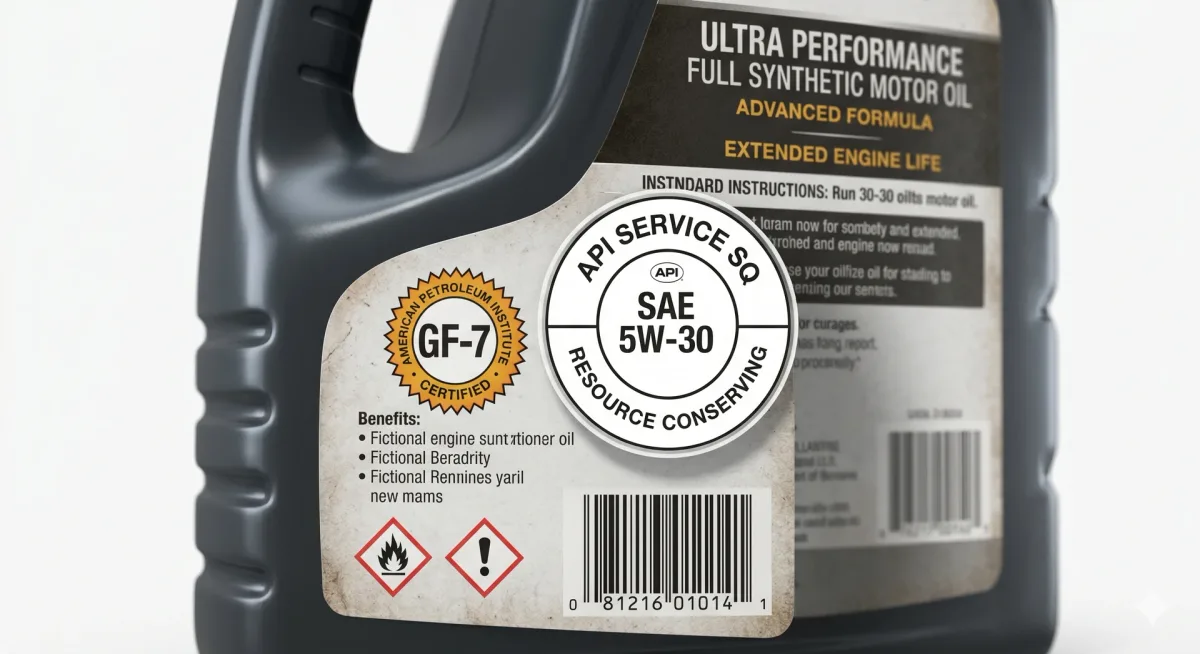
The API service donut is the circular logo on the back. Inside it, the viscosity grade sits in the middle. The API service category prints on top.
The resource-conserving line runs along the bottom.
The ILSAC starburst is the round certification mark on the front. It means the oil is licensed for modern gasoline passenger cars. If you see the starburst, that oil is safe to blend with any other starburst-certified oil of the same viscosity.
OEM approvals are printed as text on the back label. Look for lines like "Meets dexos1 Gen 3 GM6094M," "Approved MB 229.5," or "BMW Longlife-01." If your owner's manual asks for one of these and the bottle doesn't list it, that oil isn't a match. Brand and price don't override the spec.
Mixing Synthetic and Conventional Oil: What Really Happens
Mixing synthetic and conventional oil is safe. It just cancels out most of what you paid extra for.
Full synthetic uses higher-grade base stocks like Group III, IV, or V. These resist heat and oxidation better than conventional Group I or II mineral oil. Blend conventional into a synthetic sump and the average base stock quality drops.
You still get lubrication. You just lose some of the extended-drain and cold-flow benefits.
Here's when the mix is fine:
- Emergency top-off when the engine is a quart low
- Getting home safely when your usual brand isn't stocked
- Short remainder of a service interval before the next oil change
Here's when to avoid it:
- Long-term running of a synthetic-required engine on a conventional blend
- Any vehicle whose manual specifically requires full synthetic
- Extended-drain intervals relying on the synthetic's oxidation resistance
A one-quart top-off with conventional oil in a five-quart synthetic sump won't hurt anything mechanical. Do your next oil change on schedule with the correct full synthetic. If you're handling the service yourself, our step-by-step DIY oil change guide walks through the whole process.
Mixing Full Synthetic Brands (Mobil 1, Pennzoil, Castrol, Valvoline, Amsoil)
Mixing full synthetic brands is one of the safest mix scenarios you can run. All five major synthetic brands sold in the US as of 2026 meet the same core API SP and ILSAC GF-6A specs. Chemistry-wise, they're compatible.
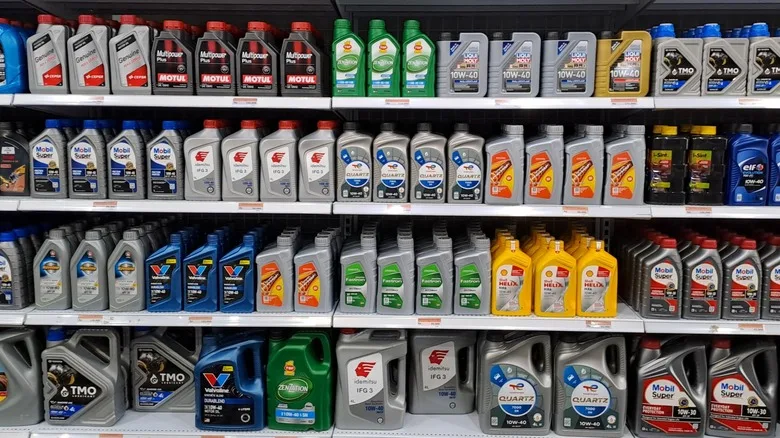
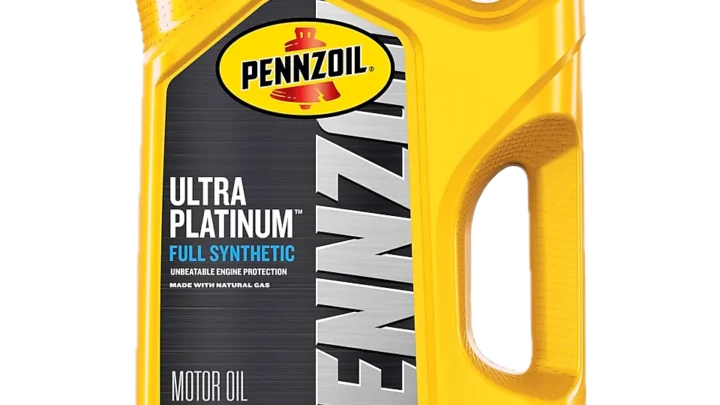
Where the brands actually differ is base stock philosophy. Amsoil Signature Series and Mobil 1 Extended Performance lean heavier on PAO (Group IV) chemistry. Pennzoil Platinum uses a gas-to-liquid base stock made from natural gas.
Castrol Edge blends synthetic base stocks with titanium additive technology. Valvoline Restore & Protect focuses on deposit removal in high-mileage engines.
Blend two of these in a top-off and nothing bad happens. The additive packages coexist. The base stocks mix cleanly.
Where you lose out is on the specialty benefits of whichever formulation you dilute. Top off a Valvoline Restore & Protect sump with plain Mobil 1 and you've watered down the deposit-cleaning chemistry a bit. Not a problem.
Just not the full benefit either.
Topping Off vs Doing a Full Oil Change With a Different Brand
These are two different situations with two different answers.
A top-off is adding a quart or less to bring the level back to full. The vast majority of the sump is still your original oil. A brand switch on a top-off is essentially harmless as long as viscosity and spec match.
A full oil change with a different brand is a fresh start. You've drained the old oil and filled with new. Brand doesn't matter here, only the spec.
This is also the smart moment to switch brands if you want to.
| Scenario | Safe? | What to Do |
|---|---|---|
| Top-off, same viscosity + API SP | Yes | Add the quart, no other action |
| Top-off, same viscosity but lower spec | Marginal | Add if urgent, change oil soon |
| Full change, different brand, same spec | Yes | No precautions needed |
| Full change, cheaper spec than required | No | Don't do it, warranty risk |
| Mixed brands in a European OEM-approved engine | Only with matching approval | Verify the label first |
Our complete DIY oil change walkthrough covers the draining and filter swap if you're switching brands at your next service.
The Decision Tree: Should You Mix These Two Oils?
Walk through these questions in order. The first "no" tells you what to do.

Does the second oil match the exact SAE viscosity grade the manual specifies?
If yes, keep going. If no, don't use it. Buy the right grade.
Does the second oil meet or exceed the required API service category (SP, SN Plus, and so on)?
If yes, keep going. If no, don't use it in a modern engine.
Does your car require a specific OEM approval like dexos1 Gen 3, MB 229.5, or BMW LL-01?
If yes, the second oil must carry that same approval. If no, move on.
Are both oils either synthetic or blended synthetic?
If yes, mix freely. If one is conventional and the engine requires full synthetic, don't mix long-term.
Is this a one-quart top-off or a full change?
Top-off with a matching-spec oil is fine. A full change should ideally run one brand for the interval.
If every answer checks out, the mix is safe. If any answer fails, either wait or drain and refill with the right oil.
When Mixing Motor Oil Is Genuinely a Bad Idea
A few situations really do call for caution. In these cases, the wrong mix can cost you real money.
Turbocharged and Direct-Injection Engines (LSPI Risk)
Modern turbo GDI engines are prone to low-speed pre-ignition (LSPI), a violent combustion event that can crack ring lands. API SP and ILSAC GF-6A oils are formulated to prevent LSPI. Mix in an older SN or SM oil and you dilute the LSPI-resistant chemistry.
On a boosted DI engine, that's not worth the risk.
European Cars With Strict OEM Approvals
BMW, Mercedes, VW, Audi, and Porsche don't just recommend approvals like LL-01 or MB 229.5. They require them. Mix a generic 5W-30 into a sump needing BMW LL-01 and you've run off-spec oil.
Long-drain intervals depending on that specific additive chemistry can start missing their targets.
Diesel Oil in a Gas Engine (and Vice Versa)
Diesel-rated oils (API CK-4, FA-4) have higher anti-wear additives like ZDDP and different detergent chemistry. Running them in a modern gas engine can foul the catalytic converter. Going the other way, a light API SP oil in a heavy-duty diesel won't handle the soot loading.
Keep these categories separate.
Mistakes People Make When Mixing Motor Oil
Most mixing mistakes come from assuming brand equals spec. It doesn't.
Common ones we see in aggregate mechanic reports and manufacturer complaint data:
- Grabbing whatever 5W-30 is on sale without checking API SP vs SN
- Using a "universal" oil in a car that requires a specific OEM approval
- Topping off a modern turbo engine with old-stock SM oil from the garage shelf
- Mixing 5W-30 and 10W-40 because both were "close enough"
- Adding diesel oil to a gas engine because the bottle also said "5W-40"
- Assuming synthetic blend counts as full synthetic for a dexos1 Gen 3 engine
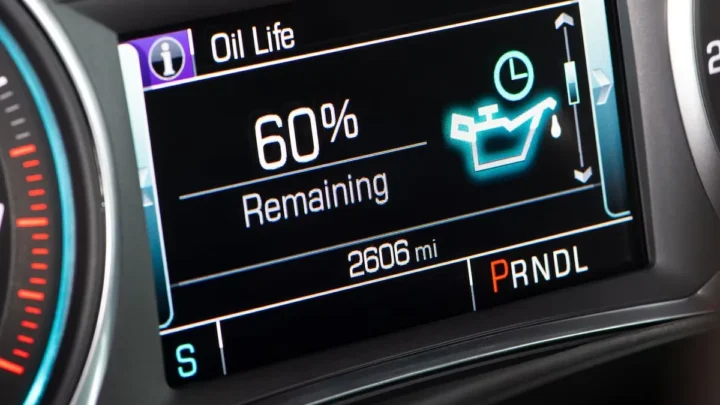
- Forgetting to reset the oil life monitor after the change
The pattern is the same every time. Someone reads the front of the bottle and skips the back. If you're buying a used car, verify the previous owner's oil habits.
Our used car pre-purchase checklist covers what to look for before signing.
Warranty and Legal Side: Magnuson-Moss, dexos, and Off-Spec Oil
The Magnuson-Moss Warranty Act protects US car buyers from dealers who claim you must use their branded oil. That's the law. What it doesn't protect you from is running off-spec oil.
If your manual specifies dexos1 Gen 3 and you fill with a generic 5W-30, the manufacturer can refuse a lubrication-related warranty claim. Same for a BMW N54 running non-LL-01 oil. The brand is your choice.
The specification is not.
Keep your receipts. If a dealer ever pushes back on a warranty claim over oil choice, proof that the oil met the required spec wins the argument. A photo of the label showing the OEM approval works too.
When checking a car you didn't buy new, request service records so you can verify the spec history.
Pro Tips for a Safe Mix (and When to Just Do a Full Change)
When in doubt, do the change instead of the mix. It's rarely worth arguing with a shop over.
- Keep a spare quart of your regular oil in the trunk to avoid roadside mixing
- If you must mix, shorten the next oil change interval by 20 to 30 percent
- After any unusual mix, watch the dipstick for foaming or dark discoloration
- Consider a used oil analysis from Blackstone Labs if you're mixing in a high-value engine
- Don't stack multiple top-offs of different brands. Change the oil instead.
- Always match the OEM approval, not just the viscosity, on European vehicles
A full drain-and-fill takes 30 minutes and costs $40 to $80 in oil for most passenger cars. That's cheaper than an engine tear-down over a lubrication problem no one can trace. Our routine oil service tutorial walks the process end to end.
FAQs About Mixing Motor Oil Brands
Can I mix synthetic and conventional oil in the same engine?
Yes, mixing synthetic and conventional oil won't damage your engine. The two are chemically compatible because both must meet API licensing standards. What you lose is the extended-drain and heat-resistance benefits of the synthetic.
Treat this as a top-off solution, not a long-term habit, especially in engines that specifically require full synthetic.
Will mixing different brands void my warranty?
No, mixing brands alone won't void your warranty thanks to the Magnuson-Moss Warranty Act. What can void coverage is running an oil that fails to meet the manufacturer's required spec, such as dexos1 Gen 3 or BMW LL-01. Match the specification and the brand choice is entirely yours.
Is it OK to mix 5W-30 and 5W-20?
Not ideally. Mixing 5W-20 and 5W-30 creates an average viscosity your engine wasn't designed for. In an emergency top-off it's better than running low on oil.
Just do a proper oil change with the correct grade at your next service, and don't repeat the mix.
Do I need to flush the engine before switching brands?
No, an engine flush isn't needed when you switch motor oil brands. As long as the new oil meets the same spec as the old one, they'll blend cleanly on the next fill. Flushes are only worth considering if you're switching from very old, sludged-up oil to a modern synthetic in a neglected engine.
Can I mix motor oil from different viscosity grades in an emergency?
Yes, but only as a short-term measure to keep the engine from running dry. A quart of the wrong viscosity is safer than a starved oil pump. Once you're home, do a full oil change with the correct grade.
Don't drive extended miles on a mismatched viscosity blend.
Your Quick Decision Guide
Boiled down to what matters: mix by spec, not by brand. If the viscosity, API category, and OEM approval all line up, two brands will share a sump without complaint.
For a top-off, any matching-spec oil from any major brand is fine. For a full change, pick one brand for the interval and skip the mixing question entirely. For a European car or a modern turbo, verify the OEM approval on the back of the bottle before you buy.
If any of those conditions don't check out, don't mix. Drain, refill with the right oil, and move on. That's cheaper and easier than second-guessing a mismatched blend at 70 mph on the interstate.

Similar Posts