Best Oil for Turbo Engines: What to Use and Why
The short answer to "what oil for a turbo engine" isn't the "5W-30 full synthetic" the internet loves to shout. It's whatever oil carries the exact OEM approval printed in your owner's manual, at the right viscosity for your climate and driving style. Get that wrong and the turbo will show you the bill.
Modern turbos spin at 150,000 to 300,000 rpm and see bearing temperatures well above 300°F. That's why standards like SAE J300 viscosity, API SP, and ACEA C3 exist as of 2026, and why the wrong bottle can quietly kill a turbo years before its time. Here's how to pick right.
Why Turbo Engines Are So Picky About Oil
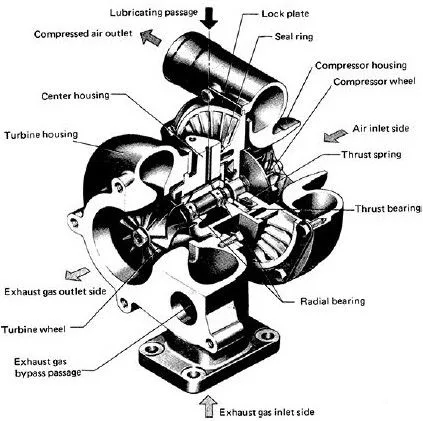
Turbo engines are hard on oil in ways naturally aspirated engines just aren't. The turbocharger itself is the harshest lubrication environment in the whole car. That tiny shaft rides on a thin film of oil while spinning up to 300,000 rpm, with bearing housings soaking up exhaust heat from the hot side.
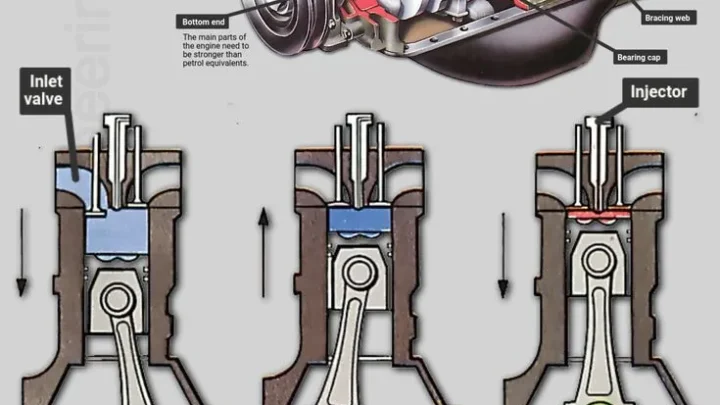
Then there's the engine itself. Modern downsized turbos run smaller displacements at much higher cylinder pressures. The oil has to fight fuel dilution, higher blowby, and the constant risk of low-speed pre-ignition (LSPI).
Direct injection piles on soot and unburned fuel too.
Old-school wisdom of "just use synthetic" isn't wrong, but it's incomplete. In our research across manufacturer service bulletins, the gap between an oil that meets the OEM approval and one that only meets a generic API grade shows up as bearing wear, timing chain stretch, and turbo coking. Picking oil for a turbo is less about brand loyalty and more about matching the exact spec the engineers designed around.
Quick Answer
Pick the exact OEM oil approval listed in your owner's manual. Match viscosity to your climate and driving style. Use full synthetic, API SP or ACEA C-class, with LSPI protection.
For most modern gasoline turbos, that's 5W-30 or 5W-40 with the correct OEM code. Stick to the mileage interval your manual states, or shorter.
Start Here: What Your Owner's Manual Is Actually Telling You
Your manual is the single most important document in this whole conversation. Somewhere inside, usually in the fluids or capacities section, there's a specific oil specification line. That line names an OEM approval code and a preferred viscosity range.
Everything else on the parts store shelf is noise if it doesn't meet that spec.
Aggregate reader reports show a familiar pattern. Someone walks into a parts store, asks for "synthetic 5W-30 for a turbo," and leaves with an oil that meets API SN but not the VW 508 00 or dexos1 Gen 3 approval their engine actually needs. It pours fine.
It lubricates. And it still causes problems within 20,000 miles.
If you'd rather handle the mechanical side yourself, our beginner walkthrough on swapping fluids at home covers the process once you've chosen the right bottle.
Decoding OEM Approval Codes (VW 508 00, dexos1 Gen 3, BMW LL-04, and Friends)
Each carmaker runs its own bench and engine tests on top of the industry baseline. When an oil passes those tests, the blender is licensed to print that approval code on the label. Common ones to know:
- GM dexos1 Gen 3 for most modern GM gasoline turbos
- VW 502 00, 504 00, 508 00, 511 00 for Volkswagen Group petrol and diesel turbos
- BMW Longlife LL-01, LL-04, LL-12 FE, LL-14 FE+, LL-17 FE+
- MB-Approval 229.5, 229.51, 229.71 for Mercedes-Benz
- Porsche C20, C30, C40
- Ford WSS-M2C948-B and WSS-M2C961-A1 for the EcoBoost family
If the bottle doesn't list your specific code, put it back on the shelf. "Meets" or "recommended for" is marketing wording. A real approval is a printed code, verifiable on the manufacturer's licensed-oils list.
API, ACEA, and ILSAC: What Each Standard Really Covers
These are the industry baselines that OEM approvals build on top of. Here's the short version.
| Standard | Region | What It Covers |
|---|---|---|
| API SP | North America | Latest gasoline spec, mandatory LSPI protection |
| ACEA C3 / C5 | Europe | Mid-SAPS, aftertreatment-safe, higher HTHS |
| ILSAC GF-6A / GF-6B | Global (fuel economy) | Low-viscosity gasoline, LSPI and chain wear tests |
| API CK-4 / FA-4 | North America (diesel) | Heavy-duty diesel with modern aftertreatment |
API standards are licensed by the American Petroleum Institute. ACEA is set by the European Automobile Manufacturers' Association. ILSAC is a joint US and Japanese standard aimed at fuel economy.
An oil can carry more than one at once, and most turbo-safe oils do.
Viscosity for Turbo Engines: 0W-20, 5W-30, 5W-40, or 0W-40?
Viscosity is how thick the oil is at temperature. SAE J300 defines the grades you see on the bottle. The number before the "W" is cold-flow behavior.
The number after is behavior at 100°C. So a 5W-30 flows like a 5-weight cold and protects like a 30-weight hot.
Turbos need enough film strength at operating temperature to keep that shaft floating. Go too thin and the film breaks down under load. Go too thick and cold-start oil pressure spikes while actual flow to the turbo lags behind.
The right grade is the one your OEM specifies for your climate.
HTHS Explained (And Why 3.5 cP Is a Magic Number for Boosted Engines)
High-Temperature High-Shear viscosity, or HTHS, measures how the oil behaves at 150°C under real shearing load. For turbo protection it matters more than the label grade.
- HTHS below 2.6 cP: fuel-economy focused, thin-film risk under boost
- HTHS 2.9 to 3.5 cP: mid-range, common in modern ACEA C5 oils
- HTHS above 3.5 cP: heavy-duty film strength, favored by BMW LL-01, VW 502 00, ACEA A3/B4
Aggregate manufacturer specs show that performance turbos and tuned engines almost always want HTHS at or above 3.5 cP. That single number is a better predictor of turbo protection than the SAE grade on its own.
Cold Starts, Hot Climates, and Choosing the Right "W" Grade
The "W" number is about pumpability when the engine is cold. Lower W means faster cold flow. If your winters routinely drop below freezing, 0W or 5W is the target.
A 10W-40 in a Minnesota January is asking for a dry turbo start.
- Sub-zero climates: 0W-30 or 0W-40 for cranking and near-instant flow
- Temperate climates: 5W-30 or 5W-40 covers most of the year
- Hot climates or heavy loads: 5W-40 for extra film strength at temperature
Turbo bearings see their worst wear in the first 10 seconds after a cold start. A lower W grade gets oil to that bearing faster, full stop.
Full Synthetic vs Synthetic Blend vs Conventional in a Turbo
For a turbo engine in 2026, this is barely a debate. Full synthetic wins for almost every application. Conventional and synthetic blends can't handle the thermal load, and they shear out of grade too fast under boost.
| Oil Type | Turbo Suitability | Why |
|---|---|---|
| Full synthetic (Group III, IV, V) | Recommended | Stable at high temp, low NOACK volatility, longer drain life |
| Synthetic blend | Marginal | Some synthetic benefits, shears faster under boost |
| Conventional (Group II) | Not recommended | Oxidizes and cokes in turbo bearings |
The base oil group matters too. Group III hydrocracked oils cover most premium synthetics on the shelf. Group IV polyalphaolefins (PAO) and Group V esters go further, with better cold flow and higher thermal stability.
Racing oils lean heavily on Group V esters for a reason.
If you're eyeing a used turbo car, oil choice history is a genuine tell. Our pre-purchase inspection checklist walks through what service records and a dipstick can actually tell you before you hand over money.
The Decision Tree: Match Oil to Your Exact Turbo Setup
This is where the answer stops being universal. Different families of turbo engines were tuned around different oil chemistries. If the oil doesn't match the family, it doesn't matter how premium the bottle is.
Find your setup below, then confirm the exact approval code in your manual.
Modern GDI Turbo (EcoBoost, TSI, Theta, SkyActiv-T)
These small-displacement, direct-injection engines are the most LSPI-sensitive vehicles on the road. Fuel dilution runs high because injectors spray straight into the cylinder. Oil here must be API SP or newer, with proven LSPI protection.
- Ford EcoBoost: WSS-M2C948-B or WSS-M2C961-A1, usually 5W-30
- VW/Audi TSI: VW 502 00 or 508 00 depending on engine, 5W-30 or 0W-20
- Hyundai/Kia Theta II turbo: API SP with ILSAC GF-6, 5W-30
- Mazda SkyActiv-T: API SP 0W-20 or 5W-30 per manual
European Turbo (BMW, Audi, Mercedes, Porsche, Volvo)
European turbos live on long-life OEM approvals and higher HTHS oils. Skip the generic ILSAC label and go straight to the manufacturer code.
- BMW N/B-series: LL-01 for older, LL-17 FE+ for newer, usually 0W-30 or 5W-30
- Mercedes-AMG turbo V8: MB 229.5 or 229.51, 0W-40 common
- Porsche 911 Turbo: Porsche C40 for newer flat-sixes, C20 or C30 elsewhere
- Volvo Drive-E turbos: ACEA C5 with Volvo approval, 0W-20
Turbo Diesel with DPF (Low-SAPS Territory)
Any turbo diesel with a diesel particulate filter needs low-SAPS oil. Full-SAPS oil will clog the DPF, and DPF rebuilds run into four figures.
- VW TDI (post-2009): VW 507 00, 5W-30
- BMW diesel with DPF: LL-04, 5W-30
- Mercedes CDI with DPF: MB 229.51 or 229.52
- Ford Power Stroke and Cummins with DPF: API CK-4, viscosity per manual
Older Port-Injected Turbo (Subaru EJ, 4G63, RB, 2JZ-GTE)
Older turbos predate LSPI worries but ran hard on their oil anyway. They tolerate higher-HTHS oils and often prefer them, especially if the car sees spirited driving.
- Subaru EJ turbo: 5W-30 or 5W-40 full synthetic, API SP with high HTHS
- Mitsubishi 4G63: 5W-40 or 10W-40 full synthetic
- Nissan RB and 2JZ-GTE: 5W-40 or 10W-40, ester-based synthetic favored
Tuned, Tracked, or Towing Duty
If the engine sees track laps, Stage 1 or Stage 2 tunes, or serious towing, step the oil up a level. Aggregate tuner forum feedback lines up with manufacturer data on this.
- Move to the higher viscosity your OEM permits (5W-40 over 5W-30)
- Choose oils with HTHS above 3.5 cP
- Cut the drain interval in half from OEM long-life
- Consider ester-boosted Group V formulations for track use
LSPI, Timing Chain Wear, and Turbo Coking: The Three Big Failures Oil Prevents
Three specific failure modes drive most modern turbo problems. Every one is oil-related first, hardware-related second.
Low-Speed Pre-Ignition (LSPI) is an uncontrolled combustion event at low rpm and high load. It cracks pistons and snaps connecting rods. API SP and dexos1 Gen 3 both require passing the Sequence IX LSPI test, which is why they exist.
Timing chain stretch happens when the oil turns acidic or shears out of grade. Chain guides wear, tensioners max out, and eventually timing skips. Long drain intervals on the wrong oil are the fastest route there.
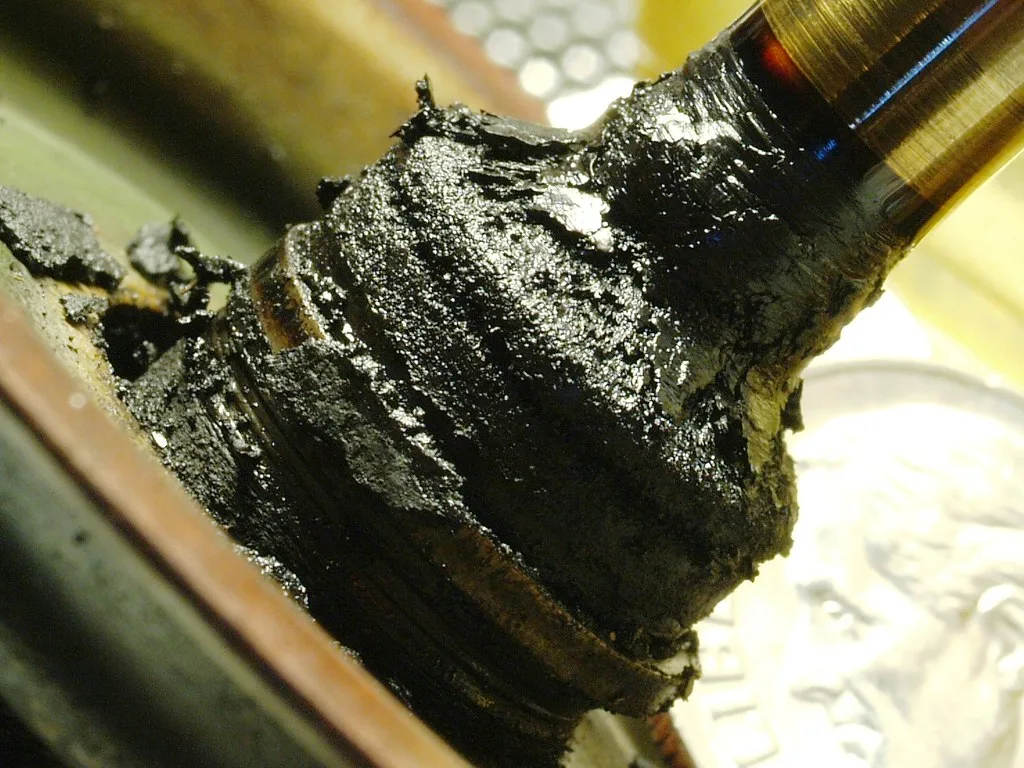
Turbo coking is carbon buildup on the shaft, seals, and bearing surfaces. It happens when hot oil sits in the bearing housing after shutdown and bakes onto metal. High-NOACK oils cook off faster and leave more deposits behind.
Oil Change Intervals for Turbo Engines (And When Long-Life Isn't Actually Long Enough)
Manufacturer long-life intervals were written for perfect conditions. Short trips, cold starts, stop-and-go traffic, towing, and hot climates all count as severe service. In severe service the interval halves.
| Driving Pattern | Suggested Interval |
|---|---|
| Highway, long trips, mild climate | Full OEM interval (7,500 to 15,000 miles) |
| Mixed daily commute | 5,000 to 7,500 miles |
| Short trips under 10 miles, cold climate | 3,000 to 5,000 miles |
| Towing, tuned, or tracked | 3,000 to 5,000 miles, or every track day |
Used oil analysis (UOA) is the honest referee. A $30 lab sample tells you fuel dilution, TBN remaining, wear metals, and viscosity retention. Aggregate UOA data on modern turbos shows most oils are done well before the long-life light comes on.
Treat every change as an inspection. A dipstick sniff for fuel smell or milky moisture catches problems early. Fresh oil should look honey-amber, not black straight out of the bottle.
Mistakes That Kill Turbos Faster Than Anything Else
Most dead turbos in aggregate failure reports trace back to a small handful of errors. Not one is expensive to avoid.
- Buying by SAE grade alone and ignoring the OEM approval code
- Running the "long-life" interval on a car doing only short trips
- Skipping the 30-second cool-down after hard driving
- Hammering boost within the first minute of a cold start
- Topping off with a random oil that doesn't match what's already in the sump
- Using ILSAC GF-6 oil in a European engine that needs ACEA C3
- Trusting a "meets or exceeds" label instead of a printed approval code
- Running full-SAPS oil in a diesel with a DPF
Any one of these can shorten turbo life. Together they explain the majority of premature turbo replacements under 100,000 miles. If you're eyeing a used car with an unknown service history, our pre-buy inspection walkthrough covers the oil-related warning signs worth checking on a test drive.
Oil Brands Worth Trusting (And What to Look For on the Bottle)
Brand matters less than approval. The goal is a mainstream synthetic with the exact OEM code printed on the back label, not just marketed on the front.
Brands that consistently carry real OEM approvals include Mobil 1, Castrol Edge, Shell Helix Ultra, Pennzoil Ultra Platinum, Motul, Liqui Moly, Ravenol, Total Quartz, Amsoil Signature Series, and Valvoline Restore & Protect. Each blender makes specific SKUs for specific approvals, so the exact product line matters more than the brand name.
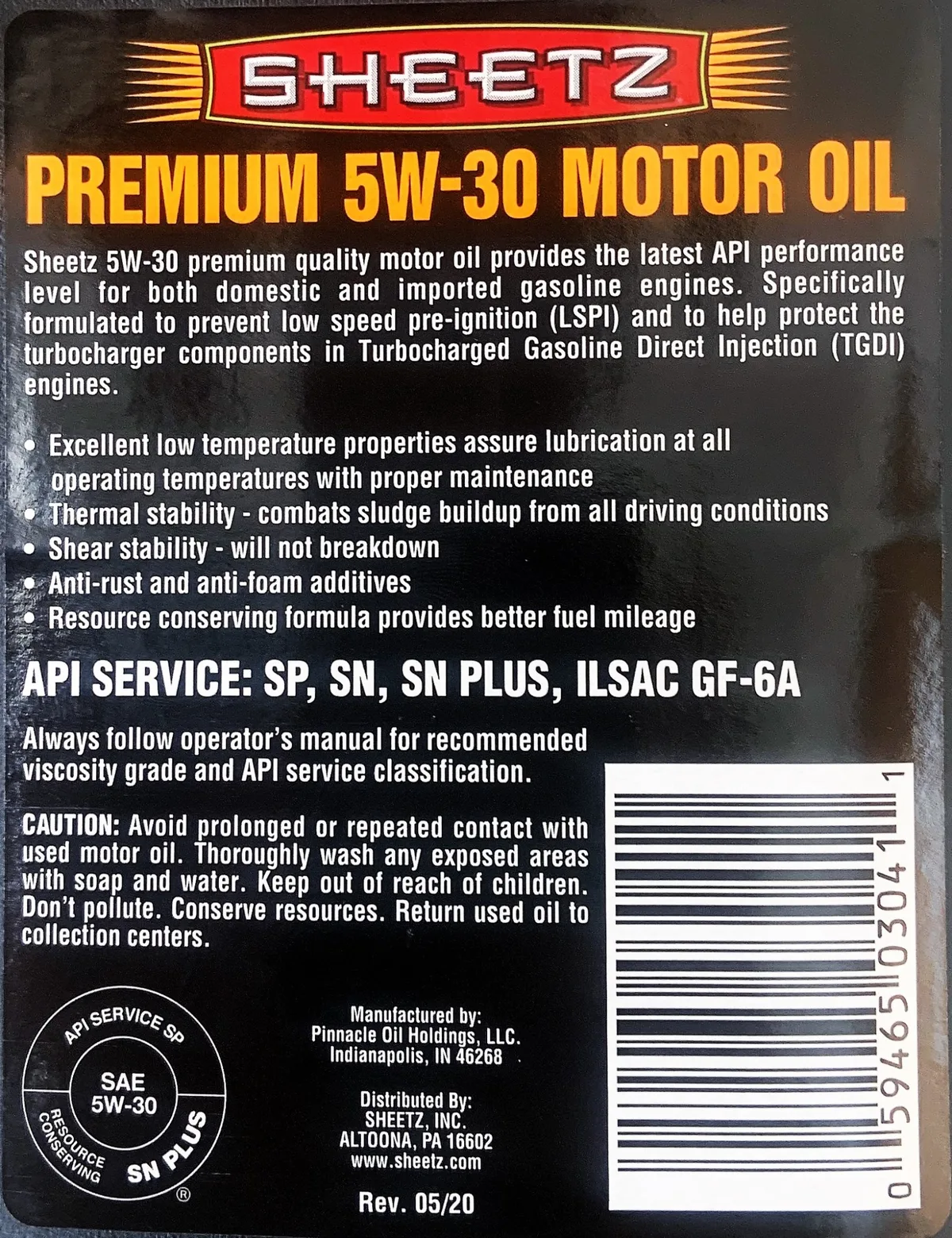
- Flip the bottle over and read the specifications block
- Verify the OEM code (dexos1 Gen 3, VW 508 00, BMW LL-04, MB 229.51) is printed there
- Confirm the API and ACEA marks match what your manual asks for
- Check the SAE grade fits your climate window
Matching the exact same product beats mixing brands when topping up. When it's time for a full drain, our beginner-friendly fluid swap guide keeps the process idiot-proof.
Warranty, Emissions, and the Legal Side of Off-Spec Oil
Using off-spec oil can void a powertrain warranty claim. The Magnuson-Moss Warranty Act protects US buyers from being forced to use a specific brand. It does not protect you if the oil failed to meet the OEM specification and caused the damage.
Emissions rules add another layer. Low-SAPS oils exist because sulfated ash and phosphorus poison catalysts and clog diesel particulate filters. Running full-SAPS oil in a DPF-equipped diesel is a federally regulated emissions failure waiting to happen.
California CARB and EPA Tier 3 both assume you're running the correct oil.
Keep the receipts and note the SKU. If a turbo fails under warranty, dealers routinely ask what oil was in it. A printed OEM approval on the bottle plus a paper trail settles that conversation fast.
Frequently Asked Questions
Can I use 5W-40 instead of 5W-30 in my turbo engine?
Only if your OEM approves both grades for your climate. Many European manufacturers list a viscosity range, so 5W-40 is fine for hot weather or towing duty. American and Asian carmakers often lock you to a single grade for warranty purposes.
Check the manual before switching.
Is high-mileage oil good for a turbo engine?
Yes, provided it carries the correct OEM approval and API SP rating. High-mileage formulas add seal conditioners that help older gaskets, but the LSPI and HTHS protection still needs to match your engine's spec. Skip any high-mileage bottle that only lists "meets API SN" without a modern approval code.
How often should turbo oil actually be changed?
Every 5,000 to 7,500 miles for mixed daily driving, sooner in severe service. Manufacturer long-life intervals of 10,000 to 15,000 miles assume near-perfect highway use. Short trips, cold starts, and tuned engines cut that interval in half.
Used oil analysis is the only real way to know.
Does synthetic oil cause turbo seal leaks?
No, that's a myth from the 1980s. Modern full synthetics are compatible with every seal material used in current turbo engines. Older engines with hardened seals sometimes weep after a switch, but the oil didn't cause the damage, it just revealed it.
The seals were already shot.
Your Final Pick: A Simple Decision Guide by Engine Type
Start with the manual. Then the climate. Then the driving style.
If all three point at the same bottle, you've made the right call.
| Engine Family | Best Starting Point |
|---|---|
| Modern GDI turbo (GM, Ford, VW, Hyundai) | Full synthetic 5W-30 with OEM approval printed on the bottle |
| European turbo with long-life | 0W-30 or 5W-30 with a BMW LL, VW, MB, or Porsche code |
| Turbo diesel with DPF | Low-SAPS ACEA C3 or CK-4 in the spec'd viscosity |
| Older port-injected turbo | Full synthetic 5W-40 with HTHS above 3.5 cP |
| Tuned, tracked, or towing | Highest OEM-permitted viscosity, halved drain interval |
Buy the oil the engineers designed the engine around. Change it before the reminder light says so. That's the whole game.

Similar Posts