Best Low Dust Brake Pads for European Sedans
The best Best Low Dust Brake Pads for Luxury European Sedans is the Akebono-EUR918, our #1 pick, and it's the only pad in this lineup with a full ceramic, copper-free formula engineered specifically to cut the dust film that makes European alloys look dirty within a week.
Want maximum bite over minimum dust instead? The EBC Brakes Redstuff 3000 Series (DP31289C for BMW, Alpina and Wiesmann) gets you there, as long as you accept a bit more rotor wear and cold-noise trade-off than a pure ceramic.
As an Amazon Associate, I earn from qualifying purchases.
Here's what this guide does differently: it tells you which drivers should skip low-dust pads entirely, which trims have a brake-by-wire setup that changes the whole equation, and how to actually check your pad compound before you order.
One honesty note up front. Everything below comes from current Amazon product data, manufacturer specs, and each pad's owner track record in verified reviews. We haven't bolted these onto a car in a shop, and we won't pretend otherwise.
Quick Answer: The Best Low Dust Brake Pads for Luxury European Sedans
If you want the short version: the Akebono-EUR918 takes the top spot for clean wheels, low noise, and a rotor-friendly ceramic compound that suits daily-driven Audi, BMW, Mercedes and Volkswagen models.
- Akebono-EUR918 Brake Pad (Best overall for quiet, low-dust daily driving): Ceramic compound built for clean alloys and gentle rotors.
- R1 Concepts Front Euro Ceramic Brake (Best for Alfa Romeo Giulia front axle swaps): Trim-specific fitment for 2017-2022 Giulia, rated 5/5 by owners.
- EBC Brakes Redstuff 3000 Series Sport (Best for BMW and Alpina performance driving): Low-dust aramid compound with a genuine bite upgrade.
- EBC Brakes Redstuff 3000 Series Sport (Best for Volvo, Saab, Vauxhall and Mazda applications): Same Redstuff formula across a wide European fitment list.
- EBC Brakes Redstuff 3000 Series Sport (Best for Lexus and premium Japanese-European crossovers): DP31589C fitment for Lexus platforms sharing Euro brake hardware.
Thinking about a track-only compound or a budget pad that dusts like crazy instead? Jump to Who Should NOT Buy below before you spend anything.
Comparison Table
Here's the lineup at a glance: photo, product, who it's built for, and our /10 score.
| Photo | Product | Best for | Score | Buy |
|---|---|---|---|---|
 | Akebono-EUR918 Brake Pad | Clean wheels, daily European sedans | 8.7/10 | Check price → |
 | R1 Concepts Front Euro Ceramic Brake | Alfa Romeo Giulia front axle | 8.4/10 | Check price → |
 | EBC Brakes Redstuff 3000 Series Sport | BMW and Alpina performance driving | 8.6/10 | Check price → |
 | EBC Brakes Redstuff 3000 Series Sport | Volvo, Saab and Vauxhall applications | 8.3/10 | Check price → |
 | EBC Brakes Redstuff 3000 Series Sport | Lexus and premium crossover use | 8.1/10 | Check price → |
Scroll sideways on small screens to see every column.
Akebono-EUR918 Brake Pad: Best Overall for Clean-Wheel Daily Driving
R1 Concepts Front Euro Ceramic Brake: Best for Alfa Romeo Giulia Front Axle
EBC Brakes Redstuff 3000 Series Sport: Best for BMW and Alpina Performance Driving
EBC Brakes Redstuff 3000 Series Sport: Best for Volvo, Saab, Vauxhall and Mazda Applications
EBC Brakes Redstuff 3000 Series Sport: Best for Lexus and Premium Crossover Applications
Buying Guide: Compound, Fitment, Rotor Health and Dust Reality
Brake pad shopping sounds simple: buy the pad that fits, install it, done. In practice, four decisions do almost all the work in determining whether you'll love or regret the set sitting on your caliper.
What is a low-dust brake pad, and does the compound really matter?
A low-dust brake pad is a friction pad formulated so the material it wears off doesn't cling to your wheel. In practice that almost always means a ceramic or aramid-fibre compound rather than a semi-metallic one.
The reason it works comes down to the friction material. Traditional semi-metallic pads contain high levels of iron and steel fibres, and those fibres oxidise into the rust-coloured film you see on European alloys after a wet drive. Ceramic and aramid compounds replace most of that metal content with things like copper-free ceramic fibres or organic fibres, and the dust they shed is pale and non-magnetic.
The trade-off you accept in return is a slightly softer initial bite, especially from cold. The Akebono-EUR918 sits at the cleaner end of that spectrum, while the aramid-based EBC Redstuff for BMW leans more toward performance feel. Both are legitimate low-dust pads.
They just express the trade-off differently.
Is fitment really as picky as mechanics say?
Yes, and honestly, this is where most brake pad returns come from. Two cars from the same manufacturer in the same model year can take different pad shapes depending on trim, brake package and rotor diameter.
A pad listed as "fits Audi A4 2012-2018" without any trim qualifier is a red flag. Look for the actual part number, cross-reference it against the OEM number on your existing caliper, and confirm the pad thickness and shape match the caliper bracket. The R1 Concepts Euro ceramic set is a good example of tight fitment being the whole point of a listing: it's built for the 2017-2022 Alfa Romeo Giulia front axle, not a broad "European import" bucket.
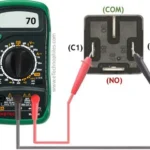
Fit your pads yourself? Reaching for a decent automotive multimeter before you start lets you sanity-check the ABS sensor and pad-wear circuit while you're in the wheel arch.
Do low-dust pads wear out rotors faster?
They can, under specific conditions. Ceramic compounds run cooler at the pad-rotor interface, which sounds good, but the same hardness that resists metal transfer also abrades the rotor surface slightly more under repeated hard braking. If your daily drive includes a long mountain descent in summer, that matters.
The practical answer is to watch rotor thickness. A standard vented rotor has a minimum thickness stamped on the hub, usually about 1 to 2 mm thinner than the new spec. If you're running low-dust pads and you're approaching that minimum, replace the rotor when you do the pads rather than reusing it.
Rotor wear also accelerates on drilled or slotted rotors, which have less material to start with.
What about bed-in, R90 approval and the noise compromise?
Every low-dust pad needs a proper bed-in. The standard procedure is 30 to 50 moderate-to-hard stops from around 40 mph with a cool-down between groups, which transfers a thin, even layer of pad material onto the rotor face. Skip it and you'll get uneven deposits, which produce judder and squeal.
R90 is the European brake pad approval standard, and every EBC Redstuff set here carries it. It's a real-world signal that the pad has been tested against European road-use requirements rather than being a generic import part.
On noise, be honest with yourself. Aramid pads often squeal lightly on the first few cold stops of the morning, especially in damp weather. If that would drive you up the wall, the pure ceramic options at the top of this list are the calmer choice.
If you're a car person who can tell your straight-six from your flat engine by ear, a faint cold-morning chirp is probably something you'll happily trade for genuine bite on a back road.
Who Should NOT Buy Best Low Dust Brake Pads for Luxury European Sedans
Low-dust pads are the wrong purchase for a few kinds of buyers. Here's who they are, and what to look at instead.
You Need Maximum Bite for Track Days
Low-dust aramid and ceramic pads are street-oriented compounds. Their friction coefficient drops off under sustained high-temperature use, which is exactly the condition a track day produces. On lap three or four you'll feel pedal travel stretch and fade creep in.
If you track the car even occasionally, look at a dedicated race compound (like a full metallic or a Pagid racing pad) for track wheels and keep a clean set for the street. A race pad will dust heavily and squeal constantly, but it will also stop you lap after lap without fading. Don't try to split the difference with a single pad on a tracked European sedan.
You Drive Only a Couple Thousand Miles a Year
Low-dust pads are worth their price when they're actually working and wearing evenly. On a car that sits most of the year, they do the opposite: cold-morning noise becomes a permanent feature, the pad surface glaze builds up because it never reaches operating temperature, and you never get the dust reduction benefit because there isn't enough brake wear happening to generate any dust at all.
If your classic or weekend-only European sedan only rolls a few thousand miles a year, a standard OEM-spec semi-metallic pad is a better economic case. You'll replace it based on age rather than wear, and you won't lose street noise comfort chasing a dust benefit you don't need.
You're Buying Purely on Price
Genuinely good low-dust pads cost more than the cheapest semi-metallic option on the shelf. Every pad in this lineup is a real friction-formulation upgrade, and that formulation is what you're paying for.
If price is the deciding factor, the honest move is to buy a fresh OEM-spec semi-metallic pad and wash your wheels more often. Dust isn't a safety issue, so if that trade works for your budget, take it. Don't buy a fakester "low dust" listing at rock-bottom price and expect ceramic-grade clean wheels, because that compound doesn't exist at that cost.
Final Verdict
For most luxury European sedan owners reading this, the Akebono-EUR918 is the pick. It takes the top score at 8.7/10 for one simple reason: it delivers the cleanest daily-drive dust behaviour in this lineup with the broadest application coverage and the strongest owner track record. Copper-free ceramic compound, quiet cold-stop behaviour, gentle on rotors.
Want sharper bite over maximum cleanliness? Get the EBC Redstuff 3000 for BMW and Alpina fitments. It trades a little dust advantage for real performance-pad feel, carries R90 approval, and sits at 8.6/10 in our scoring.
Grinding dust off a Giulia alloy every weekend? The R1 Concepts Euro front set is a trim-specific fitment with a 5/5 owner rating. Its 8.4/10 score reflects a tighter application list, but for the exact Giulia window it covers, it's a very clean answer.
Same goes for the Redstuff for Volvo, Saab and Vauxhall if your European sedan doesn't wear a BMW badge, and for the Lexus-fitment Redstuff if you're cross-shopping a Euro-Japanese platform. Each is a real, standalone pick with a honest case, not filler.
If any of the three skip-cases above describes you, save your money and look elsewhere. Low-dust pads only make sense if you'll actually drive the car enough to notice the difference.
FAQ
What's the best Low Dust Brake Pads for Luxury European Sedans overall?
The Akebono-EUR918 takes the top spot. It uses a copper-free ceramic compound, shows a 4.3/5 owner rating across a broad Audi, BMW, Mercedes and VW application list, and gives you the cleanest daily-drive wheels with the lowest noise of anything here.
Are low-dust brake pads actually safe on a daily-driven European sedan?
Yes. Every pad in this lineup is street-rated, and the EBC Redstuff sets carry R90 European road approval. Low-dust pads have slightly softer cold bite than a semi-metallic, but they're engineered for normal street temperatures and daily use, not just show cars.
Will low-dust pads reduce my braking performance?
You'll notice a slightly softer first cold stop compared with a semi-metallic pad, and you'll give up some hot-bite fade resistance for track use. For daily driving, the difference is small and most owners adapt within a week. If maximum feel matters to you, the aramid-based EBC Redstuff pads are the compromise pick.
How do I know which pad fits my exact car?
Match the exact part number against the OEM pad number rather than trusting a "fits European imports" listing. Check the trim and brake package on your car, then confirm the pad thickness and shape. The Akebono-EUR918 and EBC Redstuff listings both list their specific application windows, so cross-reference those against your model year.
How long do low-dust brake pads last?
Expect somewhere between 30,000 and 50,000 miles on a daily-driven sedan, though it varies a lot by driving style. Aggressive braking shortens pad life regardless of compound. Have the pad thickness checked at every oil service once you pass 20,000 miles.
Can I install low-dust pads myself, and do I need special tools?
Yes, pad replacement is a realistic DIY job on most European sedans, and the tools you need are a jack, stands, a lug wrench, a socket set and a C-clamp or pad spreader to push the caliper piston back. Do the bed-in procedure (30 to 50 moderate stops from 40 mph) as soon as the pads are on if you want quiet, judder-free braking.

Similar Posts