How to Change Your Own Engine Oil: A Step-by-Step Guide for Beginners

The very first repair I ever did on my own car was an oil change. I was 19, broke, and tired of paying a shop $70 for something that took them ten minutes. I watched a video, bought the parts, and did it in my driveway. It was messy, I over-tightened the drain plug, and I loved every second of it.
Here’s the truth: changing your own oil is one of the easiest, cheapest, and most satisfying things you can learn to do on a car. Do it yourself and you’ll spend maybe $25–$40 in parts instead of $70–$100 at a shop — and you’ll know for certain the job was done right.
This is the exact process I’ve used for years. Take your time on your first one, and don’t skip the safety steps.
Why bother doing it yourself?
- You save real money — roughly half the cost, every single time.
- You control the quality — the right oil, a good filter, and a properly torqued plug.
- You catch problems early — being under your car regularly means you spot leaks and worn parts before they become expensive.
- It builds confidence — once you’ve done this, bigger jobs stop feeling scary.
What you’ll need
Tools
- A socket wrench and the correct socket for your drain plug
- An oil filter wrench
- An oil drain pan (catch basin)
- A funnel
- A jack and jack stands (or ramps)
- Gloves and a few rags
Parts
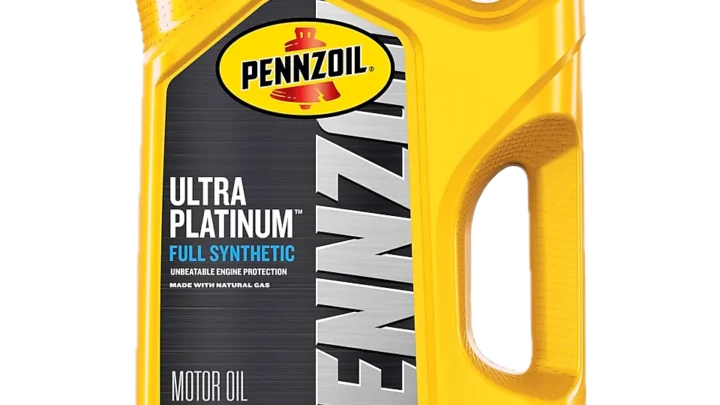
- The correct engine oil — right type and amount
- A new oil filter
- A new drain plug washer, if your car uses one
How to find the right oil and filter
This is the part beginners worry about most, and it’s the easiest to get right. Your owner’s manual has all the answers — the exact oil type (like 5W-30), whether it needs full synthetic, and how many quarts your engine holds.
No manual? The oil type is often printed on the engine oil cap, and any auto parts store can look up the right filter and oil by your car’s year, make, and model in seconds. When in doubt, ask — they do this all day.
Never guess on oil type or capacity. The wrong weight or too much oil can genuinely damage your engine.
Safety first — read this before you lift anything
I’ll say this plainly because it matters: never, ever get under a car held up only by a jack. A jack is for lifting — jack stands or ramps are for holding. Work on level ground, put the car in park (or in gear if manual) with the parking brake on, and give the car a firm shake before you slide under it.
The step-by-step process
- Warm the engine slightly. Run it for 2–3 minutes. Warm oil drains faster and carries out more gunk — but don’t let it get scorching hot, or you’ll burn yourself.
- Lift and secure the car. Jack it up and set it firmly on jack stands, or drive it up onto ramps.
- Find the drain plug and filter. Look underneath for the bolt at the bottom of the oil pan (the drain plug) and the cylindrical oil filter.
- Position the drain pan. Slide it under the drain plug — but a little offset, because the oil shoots out at an angle at first.
- Remove the drain plug. Loosen it with your wrench, then unscrew the last bit by hand. Expect warm oil to rush out. Let it drain completely — give it a few minutes.
- Remove the old filter. Use the filter wrench to loosen it, then unscrew by hand. It’s full of oil, so keep it upright and over the pan. Make sure the old rubber gasket comes off with it.
- Prep the new filter. Dab a little fresh oil on the new filter’s rubber gasket with your finger. This helps it seal and makes the next change easier.
- Install the new filter. Screw it on by hand until the gasket touches, then about three-quarters of a turn more. Hand-tight is right — don’t crank it with the wrench.
- Reinstall the drain plug. Put on a new washer if needed, thread it in by hand first (to avoid cross-threading), then snug it firm. Firm, not gorilla-tight.
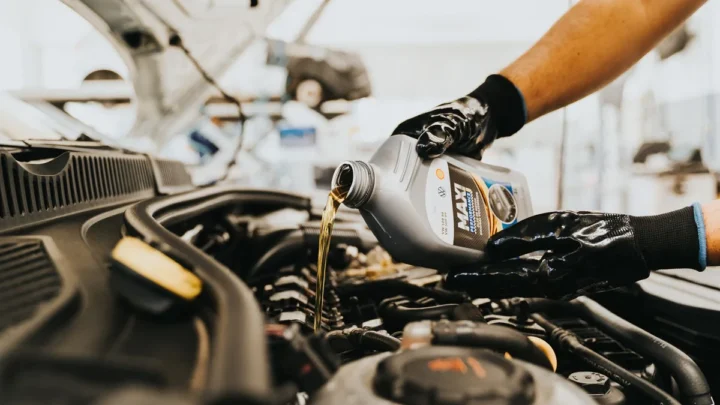
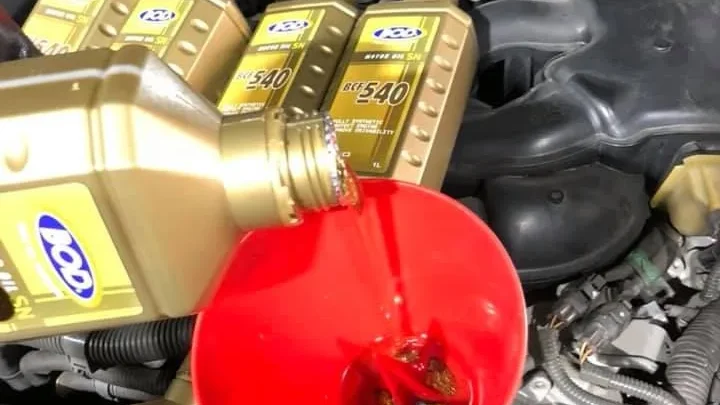
- Add the new oil. Lower the car, open the hood, remove the oil cap, and pour in slightly less than the full amount using your funnel.
- Check the level. Wait a minute, then pull the dipstick, wipe it, reinsert, and read. Top up gradually until you’re at the “full” mark. Don’t overfill.
- Run and check. Start the engine for a minute, then look underneath for leaks at the plug and filter. Shut it off, wait, and check the dipstick one more time.
Don’t forget: dispose of the old oil properly
Used motor oil is toxic and it’s illegal to dump it. Pour it into a sealable container (the empty new-oil jugs work perfectly) and take it to any auto parts store or recycling center — most take it for free.
How often should you change it?
It depends on your car and oil type, so check your manual — but as a rough guide, most modern cars on synthetic oil go 5,000 to 7,500 miles between changes. Short trips, towing, and extreme heat or cold all mean doing it more often.
Common beginner mistakes to avoid
- Over-tightening the drain plug or filter. This strips threads and makes the next change a nightmare. Firm is enough.
- Forgetting the old filter gasket. If the old rubber ring stays stuck to the engine and you add a new filter on top, it’ll leak badly. Always check.
- Overfilling. Too much oil is as bad as too little. Add gradually and trust the dipstick.
- Using a jack with no stands. I’ll keep repeating it because it’s the one that gets people hurt.
That’s it. Your first oil change might take an hour and get your hands filthy — but your fifth will take twenty minutes, and you’ll never look at that $90 shop bill the same way again.
Doing your first change this weekend? Tell me your car’s year and make in the comments and I’ll tell you exactly which oil and filter to grab.
Drive smart. 🔧
— Ryan Carter, founder of AutoVerse Authority

Similar Posts